

Balkan cuisine is difficult to sum up in just one dish. You might start with a flaky cheese pastry, enjoy grilled meat or slow-cooked beans for lunch, and finish the day with a homemade dessert. Travel across the region, and you’ll find familiar foods prepared with different ingredients, seasonings, and family traditions.
The Balkans have a long and fascinating food history. Mediterranean cooking, Ottoman influences, and Central European traditions have all helped shape what people eat today. But there’s much more to the region than grilled meats and rich pastries. Fresh salads, vegetable stews, beans, seafood, yogurt, and homemade bread are just as important.
Whether you’re discovering these foods for the first time or looking for dishes you remember from childhood, this guide will introduce you to the ingredients, history, regional specialties, and everyday meals that make Balkan cooking so varied.
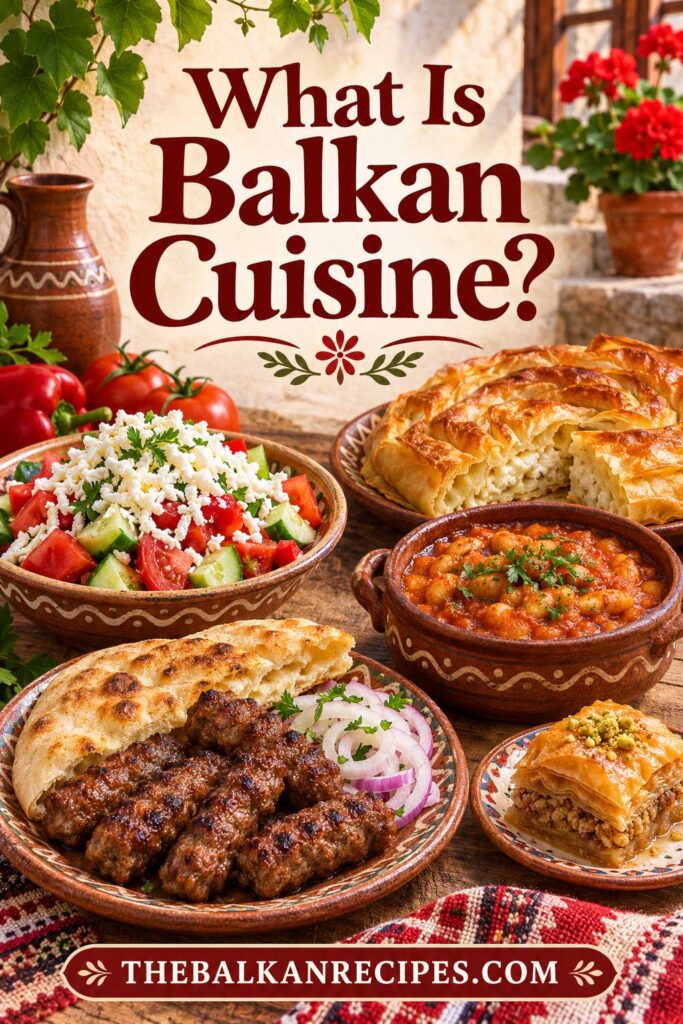
What Is Balkan Cuisine?
Balkan Cuisine refers to the traditional dishes and cooking styles found throughout southeastern Europe. The region includes countries such as Bulgaria, Serbia, Bosnia and Herzegovina, Montenegro, Albania, Kosovo, and North Macedonia, along with parts of Croatia, Romania, Slovenia, Greece, and European Turkey. Although the exact boundaries of the Balkans are sometimes debated, these countries share many culinary traditions shaped by centuries of cultural exchange.
One of the most interesting things about Balkan cuisine is how much it changes from place to place. Along the Adriatic and Aegean coasts, fresh seafood, olive oil, vegetables, and aromatic herbs are common. Farther inland, you’ll find hearty bean stews, grilled meats, homemade bread, cheese, potatoes, and comforting dishes that cook slowly over low heat.
In mountain villages and rural communities, traditional cooking often reflects the changing seasons. Families have long prepared homemade cheeses, cured meats, pickled vegetables, and preserves to enjoy during the colder months. Many of these foods remain an important part of everyday meals today.
Despite their regional differences, Balkan cuisines have something important in common: a love of fresh ingredients, homemade meals, and sharing good food with family and friends. Whether it’s a simple bowl of beans or a table filled with dishes for a celebration, food continues to play an important role in bringing people together.

How History Shaped Balkan Cuisine
One of the reasons Balkan food is so diverse is the region’s long history of cultural exchange. For centuries, the Balkans stood at the crossroads of Europe and Asia, where different peoples, empires, and trading communities introduced ingredients, cooking methods, and food traditions that gradually became part of everyday life.
This shared history explains why you’ll find similar dishes across several Balkan countries, sometimes under different names or prepared with slightly different ingredients. From savory pies and grilled meats to vegetable stews and sweet pastries, many traditional foods reflect influences that have blended over generations.
Curious about the traditions behind the region’s favorite dishes? Discover more interesting details in our guide to 20 Balkan food facts.
Ancient Greek, Roman, and Byzantine Food Traditions
Long before modern national borders existed, communities throughout the Balkans grew grains, raised livestock, made cheese, and preserved food for the colder months. Bread, vegetables, legumes, herbs, and dairy products were important parts of daily meals.
The ancient Balkans were also home to peoples such as the Illyrians in the western part of the region and the Thracians farther east. Agriculture and livestock raising were already well established, with grains, legumes, and dairy products playing important roles in local diets. Archaeological evidence from ancient Thrace offers valuable insight into these early food traditions.
Ancient Greek and Roman trade networks connected the region with markets throughout the Mediterranean, encouraging the exchange of ingredients, agricultural knowledge, and cooking practices.
Later, the Byzantine Empire helped maintain and develop food traditions involving bread, olive oil, fish, vegetables, and cheese. Religious fasting practices also influenced the preparation of meatless meals, a tradition that remains important in many Balkan communities today.
During the 6th and 7th centuries, Slavic-speaking communities migrated into different parts of the Balkans. Over time, their customs blended with those of existing populations, contributing to the region’s changing cultural and culinary traditions. Grain-based meals, porridges, bread, and preserved foods remained important across many communities, although their origins cannot always be traced to one particular people.
Although some ingredients and cooking methods have ancient roots, traditional Balkan recipes have changed considerably over time. Most dishes enjoyed today reflect centuries of adaptation rather than recipes preserved unchanged from antiquity.
Ottoman Influence on Balkan Cooking
The Ottoman Empire left one of the most recognizable influences on Balkan cuisine. Centuries of Ottoman rule, trade, and cultural exchange helped spread and reshape many foods that remain popular throughout southeastern Europe.
Savory pastries, grilled minced meats, stuffed vegetables, rice dishes, syrup-soaked desserts, and traditional coffee preparation all became familiar parts of regional food culture.
One example is börek, a savory pastry also known as burek or byrek in different Balkan countries. Depending on the region, it may be filled with cheese, spinach, minced meat, or potatoes.
Another well-known dish is sarma, prepared by wrapping a seasoned filling in cabbage or grape leaves. Families across the Balkans have their own recipes, with variations in the meat, rice, seasonings, and cooking methods.
Desserts also reveal these culinary connections. Baklava, made with thin layers of pastry, nuts, and sweet syrup, is enjoyed throughout Turkey, Greece, and much of the Balkans. Different communities have developed their own variations, often reflecting local ingredients and family traditions.
These dishes are now an important part of local culinary identities, even when they share a broader regional history.
Mediterranean and Central European Influences
Geography has played an equally important role in shaping traditional Balkan Cuisine.
Along the Adriatic and Aegean coasts, Mediterranean cooking traditions emphasize fresh seafood, olive oil, garlic, leafy greens, and aromatic herbs. These ingredients are especially common in coastal areas of Croatia, Montenegro, Albania, and Greece.
Farther inland and to the north, Central European and Austro-Hungarian influences can be seen in certain pastries, cakes, braised meats, dumplings, and paprika-seasoned dishes. These traditions are particularly noticeable in parts of Croatia, Slovenia, Serbia, and Bosnia and Herzegovina.
Sweet pastries are another example of these culinary connections. In parts of Croatia and Slovenia, apple strudel, walnut-filled rolls, and poppy seed pastries remain popular. These desserts reflect both local traditions and centuries of cultural exchange with Central Europe.
Another interesting chapter in Balkan food history began when ingredients from the Americas reached Europe. Tomatoes, peppers, potatoes, and corn gradually became important crops and everyday ingredients across the region.
Today, it’s difficult to imagine Bulgarian lyutenitsa, Serbian ajvar, or many traditional vegetable stews without tomatoes and peppers. Yet these ingredients were unknown in the Balkans before the Columbian exchange.
How the 20th Century Changed Everyday Cooking
More recent history also shaped how families prepared and enjoyed their meals.
During the socialist era in countries such as Bulgaria, Romania, and Yugoslavia, changes in agriculture, food production, and distribution influenced the availability of certain ingredients and the way people shopped and cooked. Experiences varied considerably between countries, cities, and rural communities.
Home gardening, seasonal cooking, and preserving food remained important traditions in many households. Families continued preparing roasted peppers, homemade pickles, fruit preserves, dried herbs, and vegetables stored for winter.
In Bulgaria, for example, making lyutenitsa from roasted peppers and tomatoes became a familiar seasonal activity for many families. Similar traditions of preparing ajvar, pickled cabbage, and other preserved foods remain popular across the region.
Many of these practices continue today, especially in communities where homemade food and family recipes remain closely connected to everyday life.
What makes Balkan cuisine especially interesting is that many traditional dishes belong to a shared culinary heritage rather than one country alone.
Bosnian ćevapi, Serbian pljeskavica, Bulgarian banitsa, Greek spanakopita, and the many regional versions of sarma and baklava each have their own ingredients, preparation methods, and cultural significance.
Some foods are closely associated with particular countries, while others are enjoyed throughout the Balkans under different names.
Together, these traditions have created a delicious melting pot of flavors that continues to evolve. Whether you’re enjoying grilled meat with fresh bread, a homemade cheese pie, or a bowl of slow-cooked beans, you’re tasting a small part of the region’s rich culinary history.
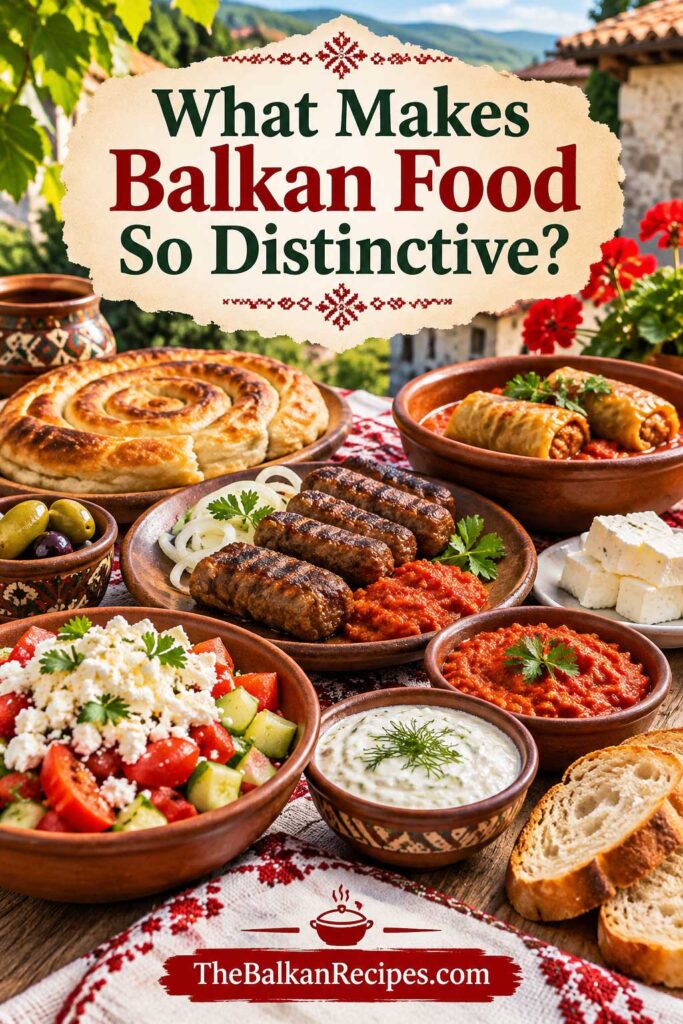
What Makes Balkan Food So Distinctive?
What makes Balkan cooking interesting isn’t just the ingredients. It’s how people combine fresh produce, homemade staples, and recipes that have been adapted over generations.
Fresh Ingredients and Seasonal Cooking
Summer is the season for ripe tomatoes, cucumbers, peppers, and fresh herbs. When colder weather arrives, meals often turn toward baked beans, cabbage rolls, soups, and slow-cooked stews.
Many households also preserve vegetables for winter, preparing pickles, fermented cabbage, and roasted pepper spreads when produce is plentiful.
Cheese, Yogurt, Bread, and Grilled Specialties
A Balkan meal doesn’t always revolve around one main dish. Grilled meat might be served with fresh bread, sliced onions, a bowl of salad, and a spoonful of roasted pepper spread.
Cheese and yogurt are equally familiar at the table, whether served on their own or used in pastries, sauces, and vegetable dishes.
Family Recipes and Regional Variations
Ask two families how they prepare sarma or banitsa, and you may get two different recipes.
One household might use more rice in its cabbage rolls, while another adds smoked meat. One family prefers its banitsa rolled into a spiral, while another layers the pastry in a baking pan.
These small differences are part of what makes traditional Balkan cooking so personal.

Essential Ingredients and Flavors in Balkan Cooking
One of the things that makes Balkan Cuisine so appealing is its use of familiar, everyday ingredients. Fresh vegetables, dairy products, beans, grains, herbs, and quality meats form the foundation of many traditional recipes. The ingredients vary by region and season, but most dishes rely on simple combinations that bring out their natural flavors.
Fresh Vegetables: Peppers, Tomatoes, and More
Peppers and tomatoes are among the most recognizable ingredients in Balkan cooking. They bring sweetness, color, and rich flavor to fresh salads, roasted vegetable spreads, sauces, and hearty stews.
Cucumbers, onions, eggplants, zucchini, potatoes, and leafy greens are also widely used. During summer, fresh vegetables often take center stage, while colder months bring more roasted, baked, and preserved dishes.
Traditional favorites such as Bulgarian Shopska salad, Serbian ajvar, and Greek briam show just how differently vegetables can be prepared across the region.
Yogurt, Cheese, and Other Dairy Products
Dairy products are an important part of everyday meals in many Balkan countries. Thick yogurt, white brined cheese, and other regional cheeses add tangy, creamy flavors to both savory and sweet dishes.
Bulgarian sirene, Greek feta, and similar regional cheeses share certain characteristics, but their flavor, texture, and production methods can differ.
Yogurt is used in cold soups, sauces, marinades, and breakfast dishes. Cheese appears in fresh salads, savory pastries, baked vegetables, and traditional pies such as Bulgarian banitsa.
Beans, Grains, and Other Pantry Staples
Beans, lentils, rice, and grains have long been important ingredients in Balkan home cooking. They are affordable, filling, and versatile, making them useful for everyday family meals.
White beans are commonly used in soups, stews, and baked dishes such as prebranac. Rice appears in stuffed peppers, cabbage rolls, and grape leaves, while wheat and corn are used in breads, porridges, and other traditional preparations.
Many meatless dishes also have roots in religious fasting traditions, especially in Eastern Orthodox communities.
Meat, Fish, and Seafood
Pork, lamb, beef, chicken, and other meats appear in a wide variety of traditional Balkan dishes. Depending on the country and local customs, meat may be grilled, roasted, simmered in stews, or combined with rice and vegetables.
Grilled favorites such as ćevapi, pljeskavica, and kebabs are especially well known. Slow-cooked meat dishes and rustic casseroles are also popular throughout the region.
Along the Adriatic and Aegean coasts, fresh fish, squid, mussels, and other seafood play a larger role in local cuisine. These dishes are often prepared simply with olive oil, garlic, lemon, and herbs.
Herbs, Spices, and Traditional Seasonings
Balkan cooking uses a wide variety of herbs and seasonings to add flavor without necessarily making dishes spicy.
Parsley, dill, mint, summer savory, garlic, paprika, and black pepper are common in many regional recipes. Cumin is used in certain meat dishes, while oregano and rosemary are especially familiar in Mediterranean-influenced cooking.
The choice of herbs often depends on the country and the dish. Bulgarian chubritsa (summer savory), for example, is frequently used to season beans, meat, and other homemade specialties.
Although some Balkan dishes feature hot peppers, much of the region’s cooking emphasizes aromatic herbs, roasted flavors, and balanced seasoning rather than intense heat.
Want to explore the seasonings used in traditional recipes? Our guide to Balkan spices introduces more of the herbs and flavors found in regional cooking.
Bread, Pastries, and Cooking Oils
Bread is an essential part of meals across much of the Balkans. Families enjoy everything from rustic loaves and flatbreads to soft homemade breads served with cheese, yogurt, grilled meats, or soups.
Thin pastry dough is another important part of the region’s food culture. It is used to prepare savory pies such as banitsa, burek, and spanakopita, often filled with cheese, spinach, meat, or potatoes.
Cooking fats also vary by region. Olive oil is especially common along Mediterranean coastal areas, while sunflower oil and other vegetable oils are widely used in inland cooking. Butter and rendered animal fats are also part of certain traditional recipes.
Together, these ingredients create the familiar combination of fresh, tangy, savory, and comforting flavors that makes Balkan cuisine so enjoyable.

Popular Balkan Foods You Should Try
One of the best ways to discover Balkan food is through its traditional dishes. From smoky grilled meats and flaky cheese pastries to fresh salads and comforting bean stews, the region offers something for almost every taste.
Many of these foods are enjoyed across several countries, although ingredients, seasonings, and preparation methods often vary. Whether you’re planning a trip to the Balkans or want to try something new in your own kitchen, these popular dishes are an excellent place to start.

Ćevapi, Pljeskavica, and Kyufte: Traditional Grilled Meat Favorites
Grilled meats are among the most recognizable foods in the Balkans, and each country has its own specialties.
Ćevapi are small, skinless grilled portions of seasoned minced meat, especially popular in Bosnia and Herzegovina, Serbia, Montenegro, and other parts of the western Balkans. Depending on the region, they’re prepared with beef, lamb, or a combination of meats. They’re commonly served with flatbread, chopped onions, and sometimes kajmak or ajvar.
Pljeskavica is another favorite, particularly in Serbia. This large grilled meat patty is usually prepared with seasoned minced meat and can be served inside flatbread with onions, cheese, or various sauces.
In Bulgaria, the traditional kyufte recipe uses seasoned minced-meat patties typically made with pork, beef, or a combination of the two. Onion, cumin, and other seasonings give them their distinctive flavor before they’re grilled or fried. They’re often served with fresh salad, roasted peppers, or homemade bread.
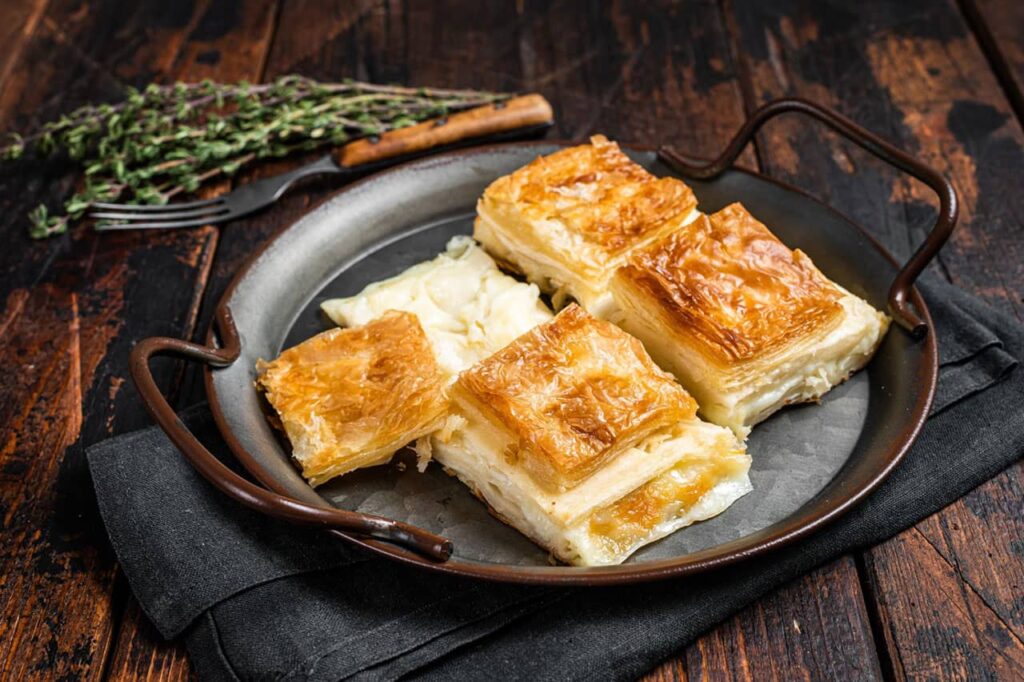
Burek, Byrek, and Banitsa: Flaky Savory Pastries
Few foods are as comforting as freshly baked Balkan pastries. Made with thin layers of dough and savory fillings, these pies are popular for breakfast, lunch, or a quick snack.
Burek and byrek belong to a family of pastries found throughout the Balkans and Turkey. Fillings and names vary by country. In Bosnia and Herzegovina, burek traditionally refers to a meat-filled pie, while cheese, spinach, and potato pies are generally identified by other names.
In Bulgaria, banitsa is one of the country’s most beloved traditional foods. It’s usually prepared with thin pastry sheets, eggs, and white brined cheese, then baked until golden and crisp.
If you’re new to Balkan pastries, our Bulgarian banitsa recipe is a wonderful introduction.
Gibanica: A Traditional Cheese Pie
Another popular Balkan pastry is gibanica, particularly associated with Serbian cuisine and also enjoyed in neighboring countries.
Unlike pies that are carefully rolled into individual spirals, many versions of gibanica use loosely arranged or crumpled pastry sheets mixed with a filling of cheese, eggs, and sometimes yogurt or other dairy products.
The pastry is baked until the top turns golden brown, while the inside stays soft and rich.
Gibanica is often served warm for breakfast, as a snack, or alongside other dishes during family gatherings. Regional versions vary, but cheese-filled preparations are especially popular.

Sarma and Stuffed Grape Leaves
Sarma is one of the most widely enjoyed traditional dishes in southeastern Europe. It consists of cabbage leaves or grape leaves wrapped around a flavorful filling, usually made with rice, minced meat, onions, and seasonings.
Different countries and families have their own ways of preparing it. Some use fermented cabbage leaves for a pleasantly sour flavor, while others prefer fresh or preserved grape leaves.
In certain recipes, sarma is slowly simmered with smoked meat, while vegetarian versions may contain rice, herbs, and vegetables. Some are cooked in tomato-based sauces, while others rely on broth, spices, or the natural flavor of the leaves.
For a hearty, comforting meal, try our Balkan sour cabbage sarma recipe.
If you prefer grape leaves, our Turkish-style yaprak sarma is another delicious option.
You can also explore our five sarma recipes to try at home for more variations.
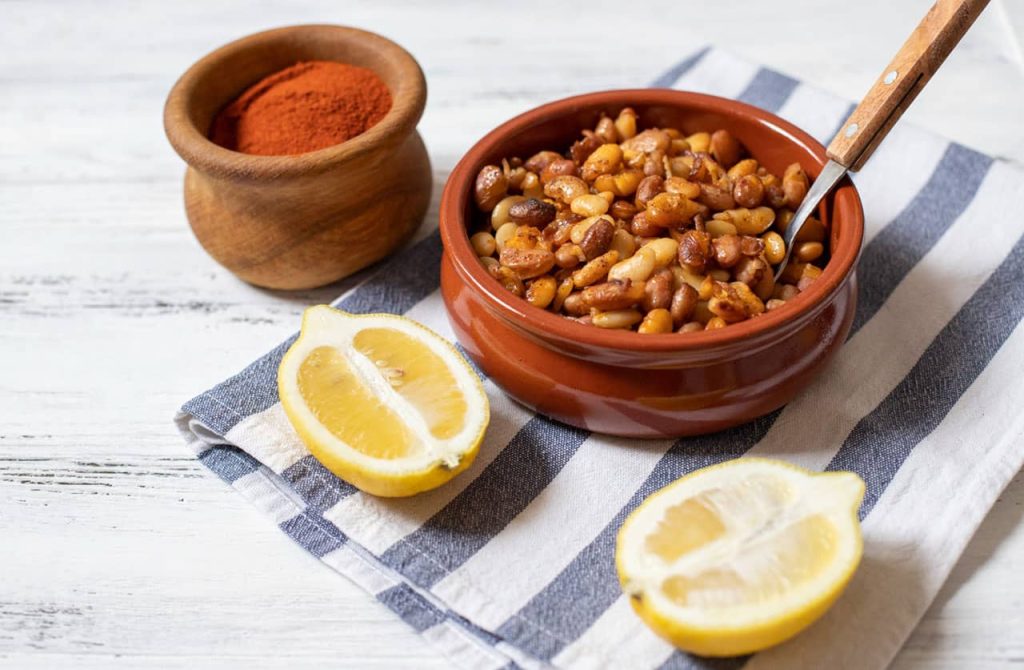
Prebranac: Traditional Balkan Baked Beans
Not every traditional Balkan dish needs meat to be satisfying. Prebranac is a wonderful example of how a few simple ingredients can create a rich, flavorful meal.
This Serbian-style baked bean dish is usually prepared with white beans, generous amounts of onion, paprika, and oil. The ingredients are slowly baked together until the beans become tender and the flavors combine.
Prebranac is often served as a side dish, but it can also be enjoyed as a meatless main course with fresh bread or a simple salad.
It’s especially popular during colder months and is also associated with meatless fasting meals.
Learn how to prepare this comforting classic with our traditional prebranac baked beans recipe.

Shopska Salad: A Fresh Bulgarian Classic
If you enjoy fresh vegetables, Shopska salad is one Balkan dish you shouldn’t miss.
This colorful Bulgarian salad combines ripe tomatoes, cucumbers, peppers, and onions, topped with a generous layer of grated white brined cheese, traditionally Bulgarian sirene.
It’s usually finished with a little oil and sometimes vinegar, allowing the fresh vegetables and tangy cheese to provide most of the flavor.
With its red tomatoes, green vegetables, and white cheese, Shopska salad also brings to mind the colors of the Bulgarian flag. Although it feels like a much older tradition, the salad became widely recognized as a Bulgarian national specialty during the second half of the 20th century.
Shopska salad is often enjoyed as a starter or served alongside grilled meats, fresh bread, and other traditional dishes.
Try our authentic Bulgarian Shopska salad recipe for a refreshing taste of Bulgaria.
Gyuvetch: A Comforting Balkan Casserole
Gyuvetch is a traditional baked or slow-cooked dish enjoyed in Bulgaria and neighboring parts of the Balkans.
The name can refer both to the dish and to the earthenware cooking vessel traditionally used to prepare it.
Common ingredients include tomatoes, peppers, onions, potatoes, and other seasonal vegetables. Some recipes also include pork, beef, lamb, or chicken, while meatless versions allow the vegetables to take center stage.
As the ingredients cook together, they develop a rich flavor that makes gyuvetch especially satisfying.
It’s a versatile home-style dish, with recipes often changing according to the season and the ingredients available.
Discover how to make this comforting meal with our traditional Bulgarian gyuvetch recipe.
Ajvar and Lutenitsa: Roasted Pepper Favorites
Roasted pepper spreads are among the most recognizable flavors of traditional Balkan cooking, particularly during late summer and autumn.
Ajvar is especially popular in Serbia, North Macedonia, and other parts of the western Balkans. It’s commonly prepared with roasted red peppers, sometimes combined with eggplant, garlic, and oil.
Bulgarian lutenitsa is another beloved vegetable spread, typically made with roasted peppers and tomatoes. Depending on the family recipe, it may also contain eggplant, carrots, garlic, or other ingredients.
Both are delicious spread on fresh bread or served alongside grilled meats, cheese, and roasted vegetables.
In many households, preparing these spreads is a seasonal tradition, with families making larger batches to preserve for the colder months.
If you’d like to try one yourself, start with our Bulgarian lutenitsa recipe.
Baklava and Traditional Balkan Desserts
No introduction to Balkan Cuisine would be complete without mentioning its desserts.
Baklava is one of the region’s best-known sweets, made with layers of thin pastry, chopped nuts, and syrup. It’s enjoyed in Turkey, Greece, Bosnia and Herzegovina, Bulgaria, and several other Balkan countries.
Recipes vary considerably. Some use walnuts, while others favor pistachios or different combinations of nuts. The sweetness, texture, and preparation methods also change from one region to another.
But Balkan desserts go far beyond baklava.
Traditional sweets include walnut-filled pastries, fruit pies, honey-based treats, milk puddings, and homemade cakes often prepared for holidays and family gatherings.
Whether you prefer a rich syrup-soaked pastry or a simple fruit-filled dessert, Balkan sweet traditions offer plenty to explore.
Discover More Traditional Balkan Dishes
Want to discover more dishes? Explore our guide to 10 traditional foods from the Balkans for more recipes and inspiration.
How Balkan Cuisine Changes From Country to Country
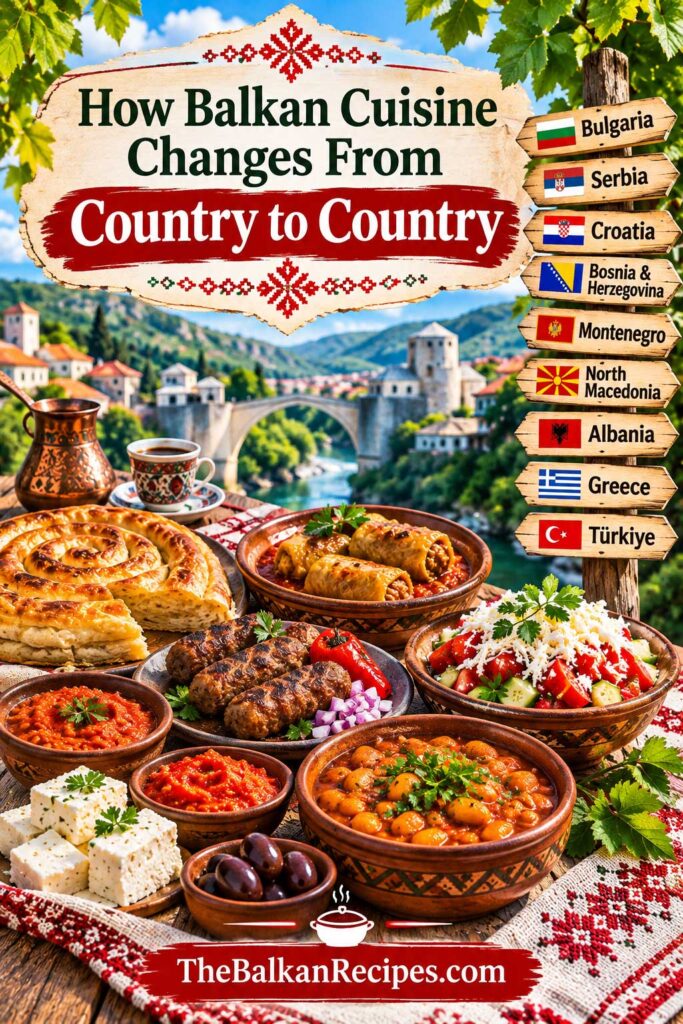
Although Balkan food shares many ingredients and cooking traditions, each country has developed its own specialties, regional flavors, and ways of preparing familiar dishes. Geography, climate, and family customs all play a role in these differences.
From the seafood-rich Adriatic coast to the mountain villages of the interior, traditional meals can vary considerably. Here’s a closer look at some of the dishes and food traditions that make each part of the Balkans special.
Bulgaria and North Macedonia
Bulgarian cuisine is known for its fresh vegetable salads, homemade pastries, yogurt dishes, grilled meats, and hearty stews. Some of its best-known specialties include Shopska salad, made with tomatoes, cucumbers, peppers, and white brined cheese, and banitsa, a flaky cheese pastry often enjoyed for breakfast.
Other favorites include tarator, a refreshing cold yogurt and cucumber soup; kyufte, seasoned grilled meat patties; and gyuvetch, a traditional baked dish prepared with vegetables and sometimes meat.
North Macedonian cuisine shares many ingredients and cooking traditions with neighboring Bulgaria and Serbia but also has distinctive local specialties. One of the most popular is tavče gravče, a comforting dish of beans baked in an earthenware pot.
Roasted pepper spreads such as ajvar are also widely enjoyed, while pastrmajlija, an elongated baked bread topped with meat, is particularly associated with the towns of Štip and Veles.
Serbia and Bosnia and Herzegovina
Serbian and Bosnian cuisines are especially well known for their grilled meats, homemade breads, savory pies, and slowly cooked family dishes. Although the two countries share many traditional foods, each has its own regional specialties.
In Serbia, pljeskavica, a large seasoned meat patty, is a popular grilled favorite. Another traditional dish is prebranac, made with white beans, onions, and paprika, then baked until rich and flavorful. Serbian households also enjoy gibanica, a savory pastry commonly prepared with cheese and eggs.
Bosnia and Herzegovina is particularly famous for its ćevapi, small grilled portions of seasoned minced meat, traditionally served with soft somun bread and chopped onions.
Other Bosnian favorites include bosanski lonac, a hearty meat and vegetable stew, and burek, a savory pastry traditionally filled with meat in Bosnian usage. Desserts such as baklava and hurmašice reflect the country’s longstanding sweet pastry traditions.
Croatia, Montenegro, and Slovenia
The cuisines of Croatia, Montenegro, and Slovenia reflect their diverse landscapes, from the Adriatic coastline to inland valleys and mountain communities.
Along Croatia’s coast, seafood, olive oil, garlic, and fresh herbs are important ingredients. Traditional dishes include brudet, a flavorful fish stew, and pašticada, slow-cooked beef often served with gnocchi. Inland, Central European influences appear in dishes such as štrukli, a pastry filled with fresh cheese.
Montenegro combines Mediterranean coastal cooking with hearty mountain traditions. Along the Adriatic, grilled fish and seafood are popular, while inland specialties include kačamak, a comforting dish made with cornmeal or potatoes and cheese.
Another well-known Montenegrin specialty is Njeguški pršut, a traditional cured ham associated with the village of Njeguši.
Slovenian cuisine has particularly strong connections with Austrian, Italian, Hungarian, and Croatian cooking. Popular dishes include jota, a hearty bean and sauerkraut or turnip stew, and Idrijski žlikrofi, small potato-filled dumplings.
For dessert, potica, a rolled pastry traditionally filled with walnuts or other ingredients, is a favorite during holidays and family celebrations.
Albania and Kosovo
Albanian and Kosovan cuisines share many traditions, particularly homemade pastries, grilled dishes, dairy products, and recipes featuring fresh vegetables.
In Albania, one of the most recognizable specialties is tavë kosi, a baked dish of lamb, rice, yogurt, and eggs. Another favorite is fërgesë, commonly prepared with peppers, tomatoes, and cheese.
Byrek, a flaky pastry filled with cheese, spinach, meat, or other ingredients, is popular throughout Albania and makes a satisfying breakfast or snack.
Kosovo has its own distinctive specialties, including flija, a traditional layered dish made from thin batter and cream, often cooked slowly under a heated metal lid.
Homemade breads, savory pies known as pite, grilled meats, and dishes featuring peppers and yogurt are also important parts of everyday cooking.
Greece and European Turkey
Greek and Turkish cuisines have deep culinary connections with the Balkans, shaped by centuries of trade, migration, and shared traditions.
Greek cuisine places considerable emphasis on olive oil, vegetables, legumes, herbs, seafood, and regional cheeses. Traditional favorites include moussaka, a baked eggplant and meat dish; spanakopita, a flaky spinach and feta pastry; and souvlaki, grilled meat served on skewers.
Coastal areas and islands are particularly known for seafood, while inland communities prepare hearty stews, baked vegetables, beans, and rustic pies.
European Turkey shares many familiar Balkan food traditions, including savory pastries, grilled meats, meze, stuffed vegetables, and syrup-soaked desserts.
Popular dishes include börek, a pastry prepared with various fillings; kebabs in numerous regional styles; and yaprak sarma, grape leaves wrapped around a seasoned filling.
Baklava and Turkish coffee are also important parts of the region’s wider culinary heritage.
Romania
Romanian cuisine combines local food traditions with Central European, Ottoman, and neighboring Balkan influences. Although only parts of Romania fall within stricter geographical definitions of the Balkans, its food shares many similarities with the cooking of southeastern Europe.
One of Romania’s best-known traditional dishes is sarmale, cabbage rolls filled with seasoned meat and rice, often served with sour cream and mămăligă, a comforting cornmeal dish similar to polenta.
Other popular foods include mici, grilled minced-meat rolls, and ciorbă, a family of flavorful soups often distinguished by their pleasantly sour taste.
Homemade bread, pickled vegetables, stews, and seasonal ingredients also play important roles in traditional Romanian meals.
Moldova and Its Culinary Connections
Although Moldova is generally considered part of Eastern Europe rather than the Balkan Peninsula, its cuisine shares close connections with Romanian and neighboring food traditions.
Traditional Moldovan dishes include plăcinte, pastries filled with cheese, potatoes, cabbage, or fruit; mămăligă, often served with cheese and sour cream; and zeamă, a comforting chicken soup usually prepared with homemade noodles.
These similarities show how traditional food crosses geographical boundaries and connects neighboring communities through familiar ingredients and recipes.
From savory pies and grilled meats to slow-cooked stews and homemade desserts, each Balkan country has its own way of preparing familiar dishes. These regional differences reflect local ingredients, family recipes, and traditions passed down through generations.
What Do People Eat in the Balkans for Breakfast, Lunch, and Dinner?
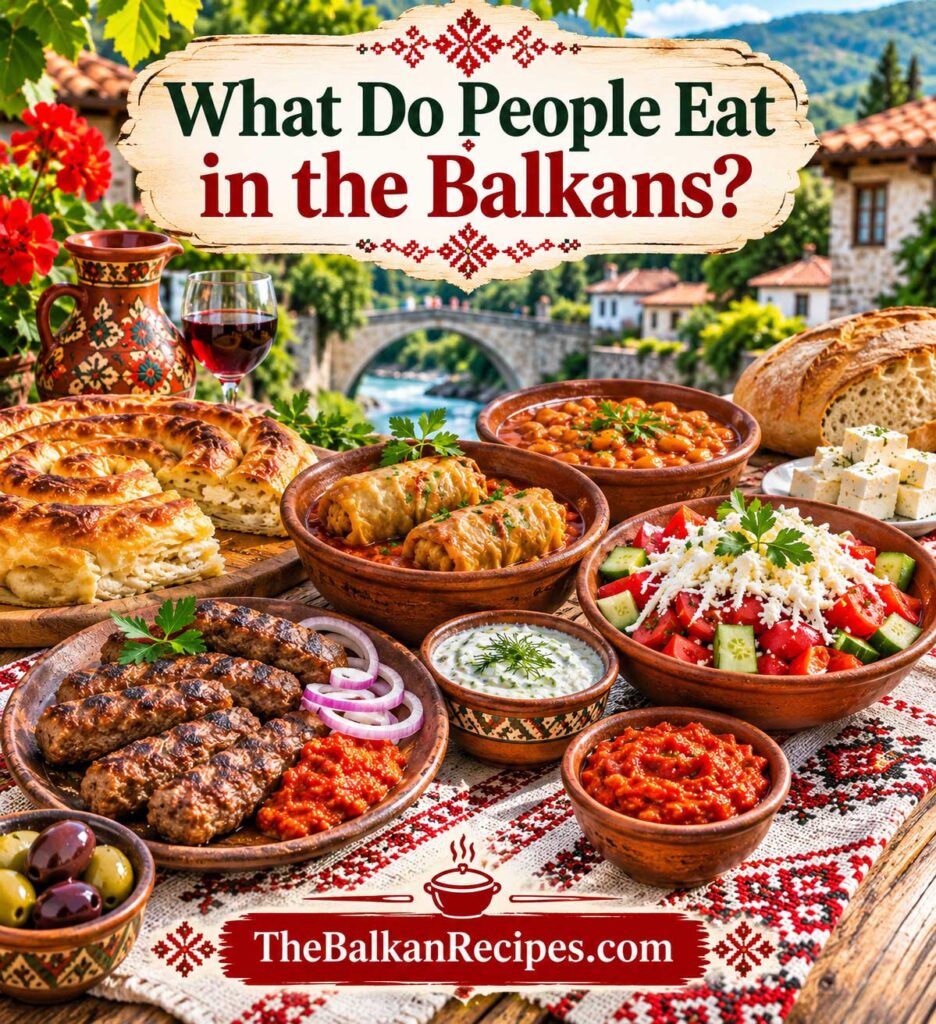
Everyday meals in the Balkans are often built around fresh ingredients, homemade dishes, and familiar family recipes. Although eating habits vary between countries and households, bread, cheese, yogurt, vegetables, beans, and meat are common parts of daily cooking.
Some families still prepare traditional meals from scratch, while others rely on bakeries, local markets, and quicker dishes during busy weekdays.
Breakfast: Savory Pastries, Cheese, and Yogurt
Breakfast in many Balkan countries is often simple but satisfying. Fresh bread, eggs, white brined cheese, yogurt, and savory pastries are popular choices.
In Bulgaria, a slice of banitsa with a cup of ayran, a refreshing yogurt drink, is a familiar breakfast combination. In Bosnia and Serbia, freshly baked burek or other savory pies from a local bakery are popular morning foods.
Other breakfast options include bread with cheese, butter, or homemade preserves, as well as eggs, yogurt, and seasonal fruit.
Coffee and tea are also common morning drinks, depending on local preferences.
Lunch: Hearty Homemade Meals
Lunch is traditionally an important meal in many parts of the Balkans, although modern work schedules have changed when and how families eat.
A typical homemade lunch might include a bowl of bean soup, stuffed peppers, a vegetable stew, or grilled meat served with bread and a fresh salad.
In Bulgaria, dishes such as gyuvetch, bean soup, and musaka are familiar home-cooked favorites. In Serbia and Bosnia, grilled meats, stews, and stuffed cabbage are popular, while coastal communities may enjoy fish or seafood with seasonal vegetables.
Soups are also common, sometimes served before the main course, especially during family meals.
Dinner: Comforting Food and Family Traditions
Dinner varies widely depending on the household and season. Some families enjoy a warm cooked meal, while others prefer something lighter, particularly if lunch was substantial.
A simple evening meal might consist of a fresh tomato and cucumber salad, cheese, roasted peppers, bread, and yogurt. Other families prepare grilled meats, baked vegetables, soups, or leftovers from lunch.
During the colder months, families often enjoy hearty dishes such as sarma, baked beans, soups, and slow-cooked stews. Summer dinners tend to be lighter, with fresh salads and seasonal vegetables taking a more prominent place on the table.
Weekend dinners and family celebrations may involve several dishes shared around the table, giving everyone a chance to enjoy different foods.
For more cold-weather meal ideas, explore our guide to Balkan comfort food for winter, featuring hearty dishes perfect for colder days.
Balkan Food Traditions and Hospitality
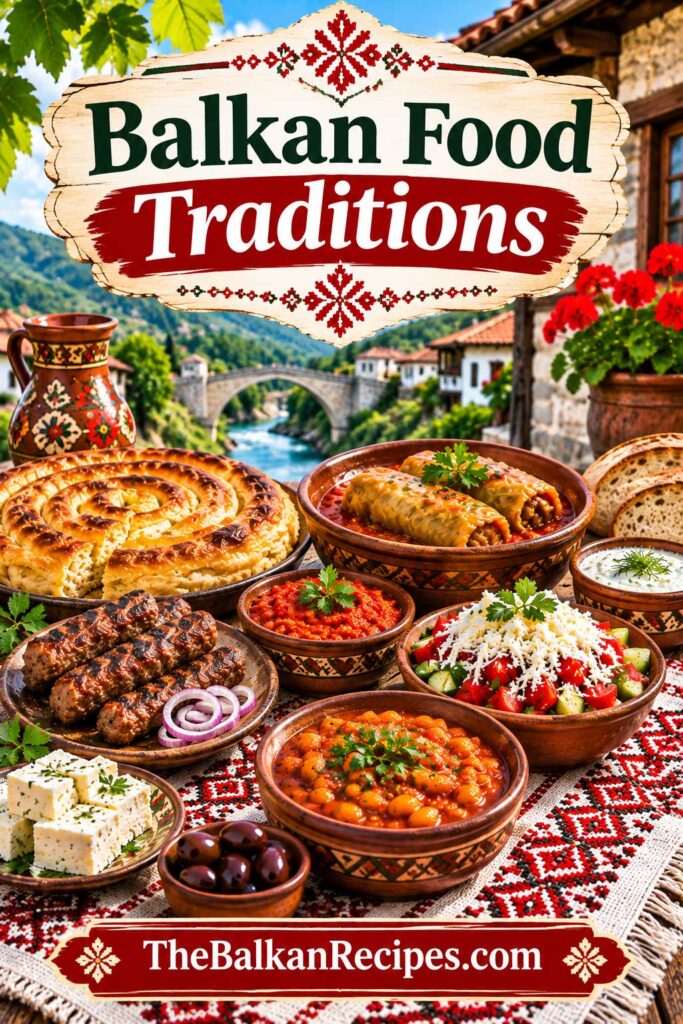
In many Balkan communities, food is more than something to eat. It’s an important part of family gatherings, holidays, celebrations, and welcoming guests. Recipes are often passed down through generations, and preparing a traditional meal can be just as meaningful as sitting down to enjoy it.
Although customs vary between countries and families, sharing homemade food remains an important part of Balkan culture.
Welcoming Guests with Food and Drinks
Hospitality has a special place in many Balkan households. When friends or relatives visit, it’s common for hosts to offer coffee, something sweet, or a homemade snack, even if the visit wasn’t planned around a meal.
In Bosnia and Herzegovina, traditional Bosnian coffee is often served in a small copper coffee pot called a džezva, accompanied by sugar cubes and sometimes a piece of rahat lokum, a sweet similar to Turkish delight.
In Bulgaria, Serbia, and other parts of the region, guests may be offered homemade pastries, fruit preserves, or rakia, a traditional fruit brandy commonly associated with family gatherings and celebrations.
Along the Mediterranean coast, small shared dishes, known as meze or mezze, are another familiar way to enjoy food together. These may include olives, cheese, dips, grilled vegetables, seafood, and fresh bread.
The foods differ, but the idea is similar: offering something to eat or drink is a way of making guests feel welcome.
Family Celebrations and Traditional Holiday Foods
Some of the most memorable Balkan dishes are prepared for holidays, weddings, religious celebrations, and large family gatherings.
In Bulgaria, banitsa is especially popular during New Year’s celebrations. Some families prepare a festive version with small written fortunes representing hopes for health, happiness, and good luck in the coming year. When serving banitsa with hidden fortunes, it’s important to let everyone know so they can enjoy the tradition safely.
In Serbia, slava, the family celebration honoring a patron saint, is an important Orthodox tradition. The celebration typically includes slavski kolač, a ceremonial bread, and koljivo, a dish made from cooked wheat.
Religious traditions also influence holiday meals throughout the region. Eastern Orthodox fasting periods have helped preserve many meatless recipes featuring beans, vegetables, grains, and bread.
In Muslim communities, celebrations such as Eid al-Fitr and Eid al-Adha, often called Bajram in parts of the Balkans, bring families together over festive meals and traditional sweets, including baklava and other homemade desserts.
These occasions show how food connects family traditions, religious customs, and local culture.
Seasonal Cooking and Preserving Food
Preparing food according to the seasons has long been important in Balkan households, especially in rural communities.
Late summer and autumn are traditionally busy times for making vegetable preserves, pickles, roasted pepper spreads, jams, and other foods that can be enjoyed during winter.
In Bulgaria, homemade lyutenitsa is a familiar seasonal preparation, while families in Serbia, North Macedonia, and neighboring countries often prepare their own versions of ajvar.
Fermented cabbage, pickled vegetables, and preserved fruits are also common in many regional food traditions.
Although modern supermarkets provide ingredients throughout the year, homemade preserving remains a valued family activity in some households, with recipes and techniques passed down from one generation to the next.
The Importance of Sharing a Meal
One of the most enjoyable aspects of Balkan dining is the variety of dishes that can appear on the same table.
A family gathering might include fresh salads, homemade bread, cheese, roasted peppers, grilled meats, savory pastries, and a traditional dessert. Rather than focusing on one elaborate dish, hosts may prepare several foods for everyone to share.
Of course, dining customs differ across the region, and modern lifestyles have changed many traditional habits. Not every household follows the same rituals or prepares the same holiday meals.
Still, the connection between food, family, and hospitality remains an important part of Balkan culinary heritage.
Whether it’s a homemade pie shared with relatives, coffee offered to a neighbor, or a festive meal prepared for a special occasion, these traditions help keep the region’s food culture alive.
Is Balkan Cuisine Healthy?
Balkan Cuisine can be part of a healthy, balanced diet, especially when meals include plenty of fresh vegetables, beans, whole grains, yogurt, fish, and other minimally processed ingredients.
Many traditional Balkan dishes are built around simple, nutritious foods. Fresh salads provide vegetables and fiber, beans and lentils offer plant-based protein, and yogurt supplies protein and calcium. Along the Mediterranean coast, olive oil, seafood, vegetables, and herbs are important parts of everyday cooking.
However, not every traditional dish is equally nutritious. Some Balkan specialties, including fatty grilled meats, cheese-filled pastries, fried foods, and syrup-soaked desserts, can be high in saturated fat, sodium, calories, or added sugar, depending on how they’re prepared.
How to Enjoy a Balanced Balkan Meal
You don’t have to give up your favorite traditional dishes to enjoy a balanced diet. A few simple choices can make everyday meals more varied and nutritious.
- Fill your plate with vegetables. Fresh salads, roasted peppers, grilled zucchini, and vegetable stews are excellent additions to traditional meals.
- Enjoy beans and lentils regularly. Dishes such as prebranac and homemade bean soup provide fiber and plant-based protein.
- Choose different protein sources. Along with traditional grilled meats, include fish, poultry, legumes, and other protein-rich foods.
- Be mindful of portions. Cheese, pastries, cured meats, and rich desserts can still be enjoyed, but portion sizes and frequency matter.
- Use herbs for flavor. Garlic, parsley, dill, savory, and paprika can add plenty of taste without relying entirely on salt.
For example, a meal of Shopska salad, baked beans, and a slice of whole-grain bread offers vegetables, fiber, and protein. A plate of grilled meat with roasted vegetables and a yogurt-based sauce provides another option.
Ultimately, the nutritional value of Balkan cuisine depends on the ingredients, preparation methods, portion sizes, and overall eating habits. The region offers plenty of delicious possibilities, from fresh vegetable dishes and comforting soups to satisfying family meals and occasional sweet treats.
For more information about building balanced meals, see the World Health Organization’s healthy diet guidelines.
How to Create a Simple Balkan-Inspired Meal at Home
You don’t need to spend hours in the kitchen or prepare a large family feast to enjoy traditional Balkan food at home. Many traditional meals are surprisingly simple, combining a few freshly prepared dishes with bread, cheese, yogurt, or homemade spreads.
The easiest way to get started is to choose one main dish and serve it with a fresh salad or a traditional side.
A Light Balkan Lunch
For a simple lunch, prepare a bowl of Shopska salad with ripe tomatoes, cucumbers, peppers, and grated white brined cheese.
Serve it with warm bread and a slice of homemade Bulgarian banitsa. The combination of fresh vegetables, creamy cheese, and crisp pastry makes a satisfying meal without much extra preparation.
A Comforting Meat-Free Dinner
If you’re looking for something hearty without meat, try prebranac, a traditional baked bean dish made with onions and paprika.
Pair it with a crunchy cucumber and tomato salad, a slice of rustic bread, and a spoonful of plain yogurt if you enjoy dairy.
It’s a comforting combination, especially during colder months.
A Traditional Balkan Grilled Meal
For a weekend lunch or casual dinner, prepare Bulgarian kyufte and serve the grilled meat patties with sliced onions, roasted vegetables, and fresh bread.
Add a spoonful of homemade lutenitsa or another roasted pepper spread for extra flavor.
You can also prepare a fresh salad or a simple yogurt-based sauce to complete the meal.
Start with two or three dishes you enjoy, experiment with different combinations, and gradually discover your own favorite Balkan meals.
Frequently Asked Questions About Balkan Cuisine
What food is the Balkans famous for?
The Balkans are famous for traditional dishes such as ćevapi (grilled minced meat), burek (savory pastry), sarma (stuffed cabbage or grape leaves), Bulgarian Shopska salad, banitsa (cheese pastry), ajvar (roasted pepper spread), and baklava. Each country also has its own regional specialties, making Balkan cuisine wonderfully diverse.
Is Balkan Cuisine the same as Mediterranean food?
Not exactly. Balkan and Mediterranean cuisines share many ingredients, particularly in coastal regions where olive oil, seafood, fresh vegetables, and herbs are popular. However, Balkan cooking also includes Ottoman, Slavic, Central European, and mountain food traditions, with dishes such as hearty bean stews, savory pastries, and grilled meats.
Is Balkan food spicy?
Most traditional Balkan dishes are flavorful without being particularly hot. Garlic, paprika, parsley, dill, savory, and roasted peppers add plenty of taste without intense heat. However, some regional specialties, hot pepper spreads, and grilled meat dishes can be spicy, depending on the recipe and personal preference.
Are there vegetarian Balkan dishes?
Yes! Many traditional Balkan recipes feature vegetables, beans, grains, cheese, and yogurt. Popular vegetarian options include Shopska salad, baked beans such as prebranac, vegetable gyuvetch, roasted pepper spreads, and cheese or spinach pastries. Stuffed peppers and grape leaves can also be made without meat. Always check the ingredients, since some traditional versions contain meat or meat broth.
Why do several Balkan countries have similar dishes?
Balkan countries share centuries of history shaped by trade, migration, cultural exchange, and periods of rule under larger empires. These connections helped spread ingredients, recipes, and cooking techniques throughout the region. Over time, local communities developed their own variations, which explains why similar dishes often have different names, fillings, and seasonings.
What do people in the Balkans eat for breakfast?
Traditional Balkan breakfasts often include fresh bread, cheese, eggs, yogurt, and savory pastries. In Bulgaria, banitsa with ayran is a popular combination, while burek and other bakery pastries are common in Bosnia, Serbia, and neighboring countries. Breakfast customs vary by region and household.
What are the most common ingredients in Balkan cuisine?
Common ingredients include tomatoes, peppers, cucumbers, onions, beans, cabbage, potatoes, yogurt, white brined cheese, bread, and seasonal herbs. Pork, lamb, beef, and chicken are used in many traditional meat dishes, while seafood and olive oil are particularly important along the Adriatic and Aegean coasts.
Is Balkan food healthy?
Balkan food can be part of a healthy, balanced diet. Many traditional dishes feature fresh vegetables, beans, yogurt, fish, and other nutritious ingredients. However, some specialties contain generous amounts of salt, saturated fat, or added sugar. Overall nutritional value depends on the ingredients, preparation methods, and portion sizes.
The Joy of Discovering Balkan Cuisine
One of the things that makes Balkan food so special is how it brings together different cultures, ingredients, and family traditions. A dish prepared in Bulgaria might have a close relative in Serbia, Greece, or Turkey, yet each version has its own flavors and story.
Whether it’s a fresh Shopska salad, a comforting bowl of baked beans, smoky grilled meats, or a warm slice of homemade banitsa, there’s always something new to discover. Many of these dishes are surprisingly simple to prepare, making it easy to bring a little Balkan tradition into your own kitchen.
If you’re new to the cuisine, start with one recipe that catches your attention. As you become more familiar with the flavors, explore traditional dishes from neighboring countries and discover how different families prepare their favorite foods.
For more inspiration, browse our 20 most popular traditional Balkan dishes and find your next recipe to try at home.
What Is Your Favorite Balkan Food?
Do you have a favorite traditional Balkan dish, a treasured family recipe, or something you’ve always wanted to try?
We’d love to hear from you! Share your favorites and cooking experiences in the comments below.
If you prepare one of our recipes, don’t forget to tag @thebalkanrecipes on Instagram and use #thebalkanrecipes. We’d love to see what you’re cooking!